


Do I Have to Replace My Child’s Car Seat After an Auto Accident?
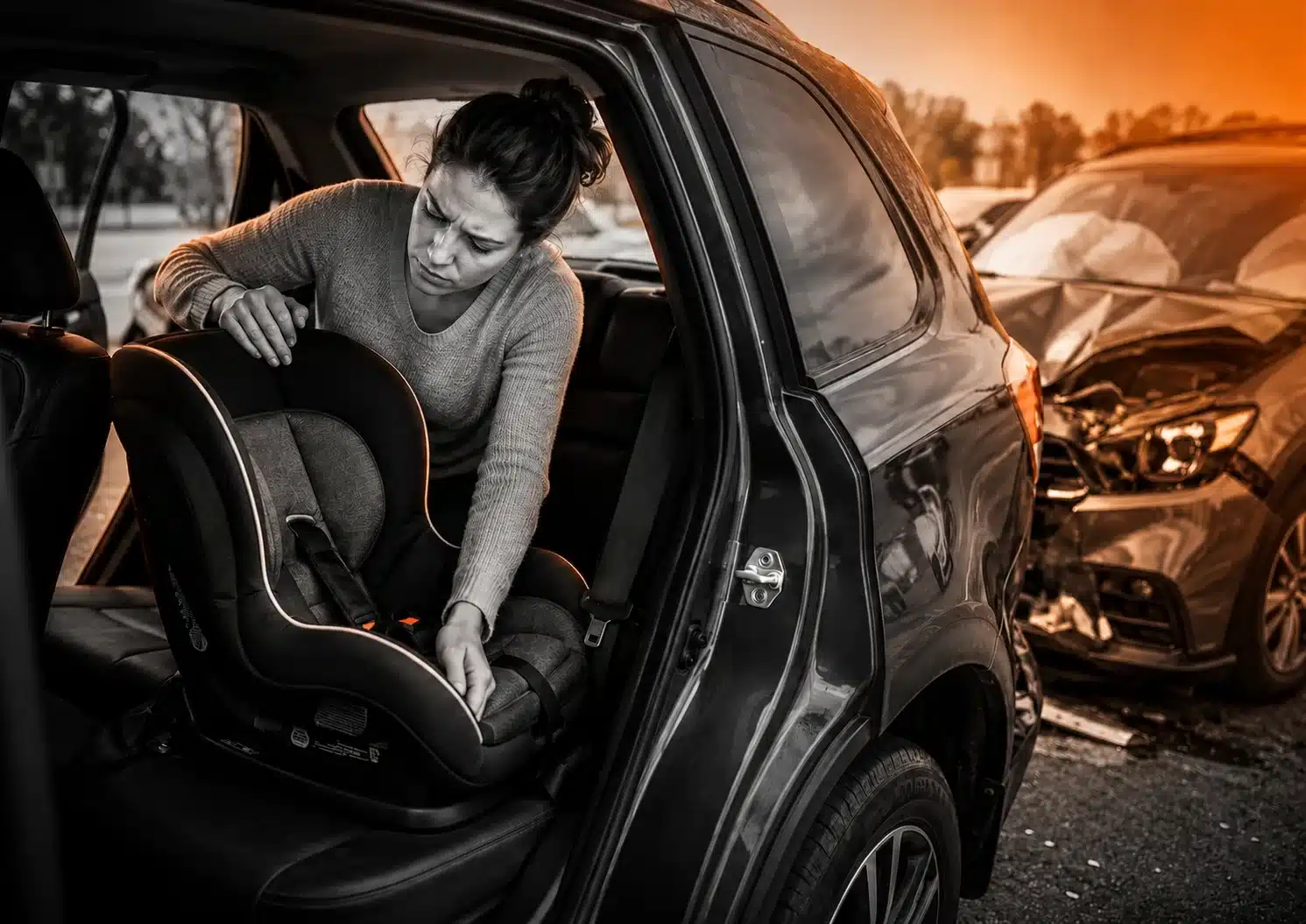
A child’s car seat should always be replaced after a moderate or severe crash. Replacement may not be required after a minor collision, but only if the crash satisfies all five conditions established by the National Highway Traffic Safety Administration and the seat’s manufacturer does not require replacement after every accident.
A crash qualifies as minor only when the vehicle could be driven away, the door nearest the car seat was not damaged, no occupant was injured, no airbag deployed, and the car seat has no visible damage. If any factor is not met, treat the crash as outside NHTSA’s minor-crash guidance. Do not use the seat again unless the manufacturer’s instructions permit continued use or the manufacturer provides written guidance for that model and crash. NHTSA warns never to use a car seat involved in a moderate or severe crash and directs parents to follow the manufacturer’s instructions.
The safest immediate step is to stop using the seat, photograph it, locate its manual, and contact the manufacturer with the model and crash details. If a child was injured, preserve the seat as evidence until an attorney or insurer confirms that it may be discarded.
RTRLAW has represented auto accident victims since 1988. Our attorneys can help families document a damaged child restraint, pursue its replacement cost, investigate a child’s injuries, and protect important evidence after a crash.
NHTSA’s Five Factors for a Minor Crash
NHTSA advises that a child restraint may be reused after a minor crash only when all five of the following factors are present and the manufacturer permits continued use. These factors are:
- The vehicle was able to be driven away from the crash scene
- The vehicle door closest to the car seat was not damaged
- No passenger in the vehicle was injured
- No airbag deployed
- The car seat has no visible damage
All five conditions must be true. A collision is not minor under this test merely because the vehicle has limited exterior damage, the child was not injured, or the seat appears normal.
The manufacturer’s rule can also be stricter than NHTSA’s general guidance. Some manuals require replacement after any crash, including a minor collision. Follow the instructions for the exact brand and model rather than advice written for a different seat.
Humble And Motivated
Brad McClelland, was my attorney and he was great during the entire process. He fought hard for and was very understanding throughout the whole ordeal. Communication and empathy were key. Also the receptionist Jordan was very helpful and friendly. He made sure all of my messages/emails and concerns were delivered. I would gladly work with RTR again!
When Should a Car Seat Definitely Be Replaced?
Replace the car seat when the collision was moderate or severe, the manufacturer requires replacement, or any part of the minor-crash test is not satisfied.
Replacement is particularly important when:
- The vehicle could not be driven from the scene
- The door nearest the seat was struck or damaged
- An occupant suffered an injury
- Any airbag deployed
- The shell, base, harness, buckle, lower anchors, or tether appears damaged
- The seat was displaced or came loose
- The seat’s crash history cannot be confirmed
Do not rely on quick visual inspection alone. NHTSA recommends replacement after moderate or severe crashes even though visible damage is only one part of its analysis. When the crash falls into a gray area, use another appropriate restraint while obtaining written direction from the manufacturer.
What If My Child Was Not Sitting in the Car Seat?
An empty car seat may still need to be replaced. NHTSA’s test focuses on the collision, vehicle damage, injuries, airbag deployment, and condition of the restraint; not whether a child occupied it at the moment of impact.
The same analysis applies to infant-seat bases. Even if the removable carrier was outside the vehicle, a base installed during a moderate or severe crash may require replacement. Check the instructions or contact the manufacturer about each component separately.
A seat installed in an unoccupied position can still experience crash forces through the vehicle’s seat belt, lower anchors, base, or top tether.
What Should You Do With the Car Seat After the Crash?
Do not immediately throw the seat away, especially if another driver caused the accident or a child was injured. The restraint may be part of the property-damage claim and could become important evidence.
Take these steps:
- Photograph the car seat while it is still installed, when safe
- Photograph the nearest door, airbags, seat belt, lower anchors, tether, base, and visible damage
- Record the brand, model, serial number, manufacture date, and expiration information
- Save the manual, receipt, registration card, and proof of the original price
- Notify the insurance adjuster that a child restraint was in the vehicle
- Ask the manufacturer for written replacement guidance
- Keep the seat until the insurer or attorney completes any needed inspection
- Save the receipt for the replacement seat
If the vehicle is towed, retrieve the car seat before the vehicle is released, salvaged, or destroyed. Once the claim and any inspection are complete, follow the manufacturer’s disposal directions and make sure the seat cannot be sold, donated, or reused.
Will Insurance Pay for a Replacement Car Seat?
Ask the insurer handling the applicable property-damage claim whether it will reimburse a replacement child restraint. Coverage, valuation, inspection requirements, and documentation may vary by policy and claim circumstances. That may be the at-fault driver’s liability carrier or your own collision insurer, depending on the circumstances and available coverage.
Provide:
- Photographs showing the seat in the crashed vehicle
- The crash report or claim number
- The manufacturer’s replacement instructions
- The original receipt, if available
- The model’s current retail price
- The replacement-seat receipt
An insurer may ask to inspect the old seat or require proof that it was destroyed. Confirm those requirements before disposing of it, but do not continue transporting a child in a seat that should be replaced.
Avoid accepting a used seat with an unknown crash history as a substitute. NHTSA provides a checklist for evaluating secondhand seats and encourages owners to register car seats for recall and safety notices.
What If the Child Was Injured?
A child should be medically evaluated when there are symptoms, a significant impact, or any concern about injury. Children may not be able to clearly describe pain, dizziness, numbness, headaches, or changes in vision and behavior.
Seek immediate care for:
- Loss of consciousness, vomiting, confusion, or unusual sleepiness
- Neck, back, chest, or abdominal pain
- Difficulty breathing
- Visible bruising from the harness or seat belt
- Weakness, numbness, or trouble walking
- Persistent crying, irritability, or behavior changes
Preserve the car seat if the child was injured. Its installation, harness positioning, and condition may help explain the forces involved. Photograph everything before loosening straps, cleaning fabric, removing labels, or dismantling the seat.
Even when a car seat protected the child successfully, it may have completed its job and still require replacement before the next ride.
Child Car Seat Laws in Florida, Texas, Massachusetts, and Michigan
State child-restraint laws govern how children must be restrained while traveling; they generally do not establish when a seat must be replaced after a crash. The accident laws in Florida, Texas, Massachusetts, and Michigan do not create one nationwide crash-replacement standard. For replacement decisions, follow NHTSA’s crash guidance and the instructions for the specific child-restraint model. State requirements vary, so confirm the current law where the child is riding.
| State | General Child-Restraint Requirement |
| Florida | Children age 5 and younger must generally use a crash-tested, federally approved restraint |
| Texas | Children younger than 8 must generally use a child safety seat unless taller than 4 feet 9 inches |
| Massachusetts | Children under 8 must use a child restraint unless taller than 57 inches, and it must be secured according to manufacturer instructions |
| Michigan | Age- and size-based rear-facing, forward-facing, and booster requirements apply, with children under 13 generally riding in the rear seat when available |
Florida
Florida Statute 316.613 requires proper use of a crash-tested, federally approved restraint for children age 5 and younger. Children through age 3 must generally use a separate carrier or integrated child seat, while children ages 4 and 5 may use a qualifying carrier, integrated seat, or booster.
Texas
Texas requires children younger than 8 to use a child safety seat unless they are taller than 4 feet 9 inches. Texas law also requires the safety-seat system to be used according to its manufacturer’s instructions.
Massachusetts
Massachusetts law requires children under 8 to use a child restraint unless they are taller than 57 inches. The restraint must be properly fastened and secured according to the manufacturer’s instructions.
Michigan
Michigan’s updated child-passenger laws took effect April 2, 2025. They connect rear-facing, forward-facing, and booster-seat stages to the child’s age, height, weight, and the manufacturer’s limits. Children under 13 must generally ride in the rear seat when one is available.
Meeting the minimum state requirement is not enough if the seat’s instructions say it must be replaced. A manufacturer-disqualified seat should not be reused merely because it remains the correct seat type for the child.
How Do You Choose and Install the Replacement?
Select a replacement based on the child’s current age, height, and weight, not simply the model purchased years earlier. The child may now need a different seat type or may be close to exceeding the former seat’s limits.
NHTSA recommends choosing a seat that fits both the child and vehicle, following the car seat and vehicle manuals, keeping the child within the manufacturer’s limits for as long as possible, and keeping children in the back seat through at least age 12.
After purchasing the replacement:
- Check the manufacture and expiration dates
- Register it for recalls and safety notices
- Install it using the permitted seat belt or lower-anchor method
- Use the top tether for a forward-facing seat when allowed
- Have the installation checked by a certified child passenger safety technician
NHTSA provides a car-seat inspection-station locator, and inspections are free in many locations.
Frequently Asked Questions
Does a fender bender automatically ruin a car seat?
Not always. The seat may remain usable only if all five NHTSA minor-crash conditions are met and the manufacturer permits continued use.
Do I replace a booster seat too?
Yes. The same crash analysis applies to booster seats. Check the manufacturer’s instructions and replace the booster after a moderate or severe crash.
What if there is no visible damage?
A lack of visible damage satisfies only one part of NHTSA’s test. The other four conditions and the manufacturer’s rules still matter.
Can I donate the crashed seat?
No. A seat that requires replacement should not be donated, sold, or passed to another family. Preserve it until the claim is documented, then dispose of it so it cannot be reused.
Protecting Your Child and Your Claim After a Crash
Replace a child restraint after a moderate or severe collision. After a genuinely minor crash, reuse it only when every NHTSA condition is satisfied and the manufacturer allows it.
Document the seat before it disappears with the damaged vehicle, submit its replacement value to the insurer, and preserve it when a child was injured or liability is disputed. A car seat is safety equipment designed to protect a child during a violent event, not ordinary property that should be judged only by whether it looks damaged.
RTRLAW has been protecting accident victims since 1988. If your child was injured in a crash or an insurance company refuses to cover accident-related losses, call 1-833-HIRE-RTR for a free, no-obligation case review. Our motor vehicle accident attorneys handle qualifying personal injury claims on a No Win, No Fee basis.