



How to Prove a Speeding Driver Caused a Car Accident
Speeding is one of the leading causes of serious car accidents in the United States. According to the National Highway Traffic Safety Administration (NHTSA), speeding was a factor in 29 percent of all traffic fatalities in the most recent reporting year, claiming more than 11,000 lives. When a driver chooses to speed and causes a collision, the victims they leave behind face mounting medical bills, lost income, and a long road to physical recovery.
Proving that a speeding driver caused your accident requires more than telling your story to an insurance company. Insurers are skilled at finding ways to minimize payouts, dispute liability, and shift blame. Building a winning case requires physical evidence, expert analysis, and a legal team that knows how to use both.
At RTRLAW, our personal injury attorneys have represented accident victims since 1988. With over 21 years of personal injury experience, Managing Partner Nicholas R. Thompson and our legal team understand exactly what it takes to prove a speeding driver was at fault and secure the full compensation you deserve. In this guide, we walk you through the evidence, the legal framework, and the steps that give your claim the best chance of success.
Why Proving the Driver Was Speeding Is Critical to Your Case
In a car accident claim, fault is everything. Establishing that the other driver was speeding helps demonstrate negligence, which is the legal foundation for recovering compensation. To hold a speeding driver accountable, your attorney must prove four elements:
- The driver owed you a duty of care to drive safely and obey traffic laws.
- The driver breached that duty by exceeding the speed limit or driving too fast for conditions.
- That breach directly caused the accident and your injuries.
- You suffered quantifiable damages as a result, including medical expenses, lost wages, and pain and suffering.
When a driver breaks a traffic law such as a speed limit and that violation causes an accident, Florida courts treat the violation as evidence of negligence that a jury may weigh alongside the other facts of the case. This comes from Florida case law dating to Jesus v. Seaboard Coast Line Railroad Co., 281 So.2d 198 (Fla. 1973), which held that violating a statute meant to protect the public generally, such as a traffic law, is not automatically ‘negligence as a matter of law.’ It still carries significant weight, but you need documented proof that the driver was actually speeding and that their speed was the proximate cause of the collision, since the other side can offer evidence to explain or contest the violation.
Insurance companies do not simply take your word for it. They hire their own investigators and rely on adjusters trained to dispute liability and reduce settlements. At RTRLAW, our attorneys have worked on both sides of these cases. Managing Partner Nicholas R. Thompson brings firsthand knowledge of how insurance defense strategies work and how to counter them with solid, documented evidence.
Mark Glynn
I was very pleased with my results. I was not expecting this outcome. He made my day! Lance, Caroline, and Nancy were amazing. They were always answering my questions and willing to helpful. He made me feel like mattered. Hire RtrLaw and Lance’s team if you are looking for an attorney.
Key Evidence Used to Prove a Speeding Driver Caused Your Accident
Building a strong speeding accident claim means gathering multiple layers of evidence. No single piece of proof is sufficient on its own. The most successful cases combine several of the following evidence types.
The Police Accident Report
When law enforcement responds to a crash, officers prepare an official accident report that can include estimated or documented vehicle speeds, citations issued for speeding or reckless driving, witness statements collected at the scene, road and weather conditions, and the officer’s preliminary determination of fault.
A report that includes a speeding citation or notes speed as a contributing factor is one of the most straightforward forms of evidence in a speeding accident claim. Even when no citation was issued, a report that references speed or driving behavior can support your case. Request a certified copy of the full police report as soon as it is available, typically within five to seven business days of the crash.
Eyewitness Testimony
Independent witnesses who saw the accident from a neutral vantage point can provide compelling testimony about the speed of the at-fault vehicle. Potential witnesses include other drivers or passengers in nearby vehicles, pedestrians and cyclists near the scene, business employees or customers with a view of the roadway, and residents who observed the crash from a nearby property.
The credibility of eyewitness testimony depends largely on how quickly it is documented. Memories fade and details become less reliable over time. Our team moves quickly after an accident to identify and contact potential witnesses, record their accounts, and preserve their statements for use in your claim.
Physical Evidence at the Accident Scene
The crash scene itself often contains evidence of vehicle speed. Trained investigators analyze skid marks and tire marks, whose length and pattern can be used to calculate the vehicle’s speed at braking. Longer marks typically correspond to higher pre-crash speeds.
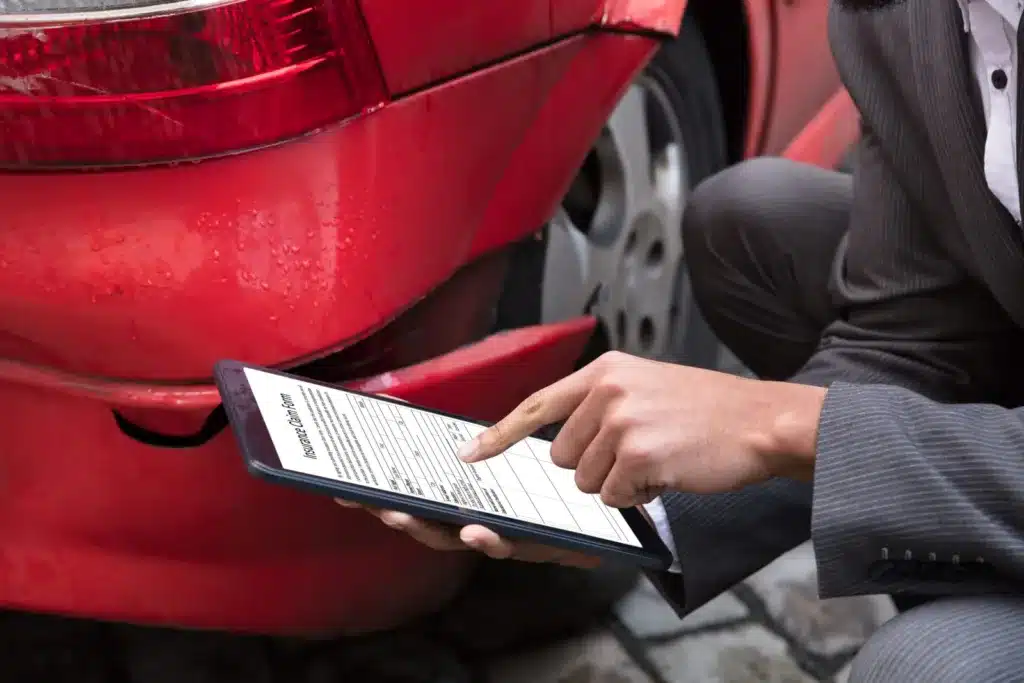
Vehicle damage patterns also tell a story. High-speed collisions tend to cause more severe and widespread damage, and the location and depth of that damage can indicate the force of impact. Investigators also examine the debris field: vehicle parts, shattered glass, and personal property that travel significant distances from the point of impact typically reflect the energy of a high-speed collision.
Physical evidence at the scene must be preserved quickly. Skid marks fade, debris is cleared by road crews, and weather can wash away critical markings within hours. Photograph everything you can safely capture at the scene and contact RTRLAW immediately so our investigators can respond.
Traffic Camera and Surveillance Footage
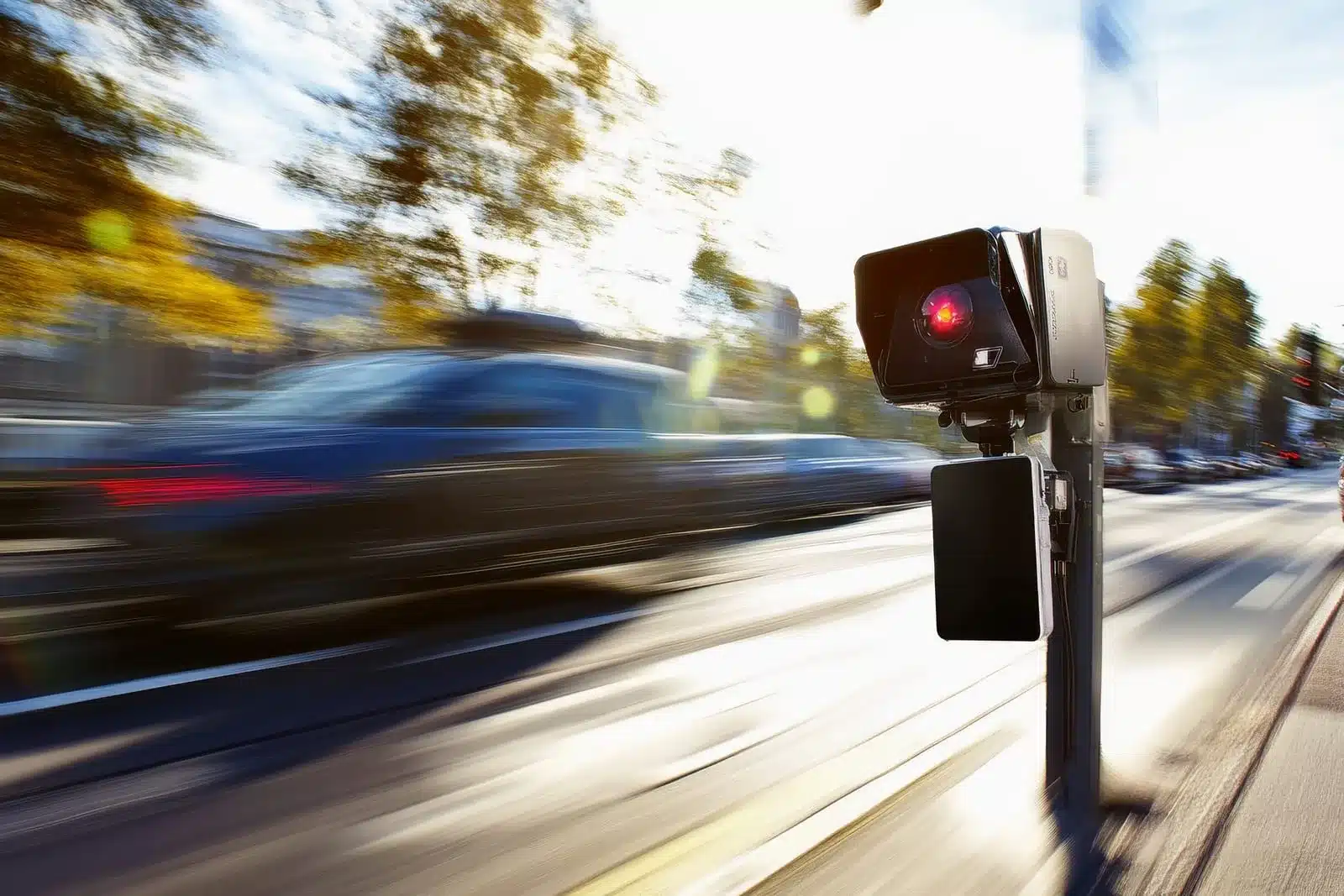
Video footage is among the most compelling evidence in any speeding accident case. Potential sources include state DOT and municipal traffic management cameras, red light and speed enforcement cameras, security cameras from gas stations, convenience stores, and banks near the crash site, parking garage cameras, and residential doorbell and home security systems along the route.
Most surveillance systems overwrite their recordings within 24 to 72 hours. Once our team is retained, we immediately send written preservation demands and, when necessary, legal subpoenas to every potential camera source near the crash location. This aggressive approach to evidence preservation has helped us secure critical footage that would otherwise have been permanently lost.
Dashcam Video
Dashcam recorders, once limited to police and commercial vehicles, are now common in personal vehicles. If you, a witness, or a nearby driver had a dashcam recording at the time of the accident, that footage can directly capture the at-fault vehicle’s speed and behavior in the moments before impact. Our investigators also assess whether nearby commercial vehicles, rideshare drivers, or delivery trucks may have captured relevant footage with their onboard cameras.
The Driver’s Event Data Recorder (Black Box)
Most modern vehicles are equipped with an Event Data Recorder (EDR), often called a vehicle ‘black box.’ Federal regulation 49 CFR Part 563 does not require every vehicle to have an EDR, but it sets strict data standards for any EDR that a manufacturer chooses to install, and the large majority of vehicles built since model year 2013 include one. In the seconds before a collision, an EDR that meets this standard records vehicle speed, throttle position, brake application timing and force, steering wheel angle, seatbelt usage, and airbag deployment data.
EDR data can directly confirm the at-fault driver’s speed at the moment of impact. Accessing this data requires specialized equipment as the data is often locked. In some cases accessing such information may require legal authorization, and vehicle owners or insurers may attempt to access or overwrite it before you can act. RTRLAW immediately secures preservation demands and, when needed, court orders to prevent the destruction of this evidence.
Accident Reconstruction Expert Analysis
In complex or high-value speeding cases, our firm retains qualified accident reconstruction experts. These specialists use physics, physical evidence, and computer-assisted modeling to recreate the crash and calculate vehicle speeds with scientific precision. Their work can determine pre-impact speed from skid marks and vehicle deformation, assess whether the driver could have avoided the collision at the posted speed limit, and provide expert witness testimony in depositions and court proceedings.
The presence of a credible accident reconstruction expert often accelerates settlement negotiations significantly. Insurance companies are far more likely to offer a fair settlement when they know our team has qualified expert support ready for trial.
Cell Phone and Electronic Records
Speeding and distracted driving frequently occur together. A driver who was texting or calling while speeding represents a compounded form of negligence. Cell phone records obtained through subpoena can reveal whether the at-fault driver was using their phone at the time of the crash. For accidents involving commercial vehicles, electronic logging device (ELD) data and GPS records may also reflect vehicle speed history in the period leading up to the collision.
Florida Speeding Laws and How They Apply to Your Accident Claim
Florida’s basic speed rule requires drivers to travel at a speed that is reasonable and prudent under the conditions. Under Florida Statute Section 316.183, the default maximum speed is 30 mph in business or residence districts and 55 mph at other locations unless another lawful speed is established. Separate Florida speed-zone provisions, including Fla. Stat. § 316.187, authorize higher maximums in certain areas, including up to 70 mph on limited-access highways and up to 65 mph on certain divided highways outside urban areas.
Specific maximum speed limits under Florida law may include:
| Road Type | Maximum Speed Limit |
| Interstate highways (where posted) | 70 mph |
| State highways and U.S. routes | 65 mph |
| County roads (default where not otherwise posted) | 55 mph |
| Business and residential districts | 30 mph |
When a driver exceeds Florida’s speed limits and causes a crash, their violation of Section 316.183 is treated under Florida law as evidence of negligence, not as automatic proof of fault. Because traffic laws are designed to protect the public generally rather than a specific class of vulnerable people, Florida courts do not apply true negligence per se to statutes like this one. A documented speeding violation still meaningfully strengthens a claim, but your attorney still has to connect that violation to the crash and your injuries with additional evidence.
Florida’s 2023 tort reform legislation (HB 837) changed the state’s negligence standard from pure comparative negligence to modified comparative negligence with a 50 percent threshold. Under this system, if a court finds you more than 50 percent at fault for the accident, you cannot recover compensation. If your fault is 50 percent or less, your damages are reduced in proportion to your share of responsibility.
HB 837 also reduced Florida’s statute of limitations for personal injury claims from four years to two years, meaning accident victims must act quickly to protect their rights. If you have been involved in a crash, do not wait to contact an attorney.
Texas Speeding Laws and Car Accident Liability
For clients injured in Texas, our attorneys understand the state-specific legal landscape that governs speeding accident claims. Under Texas Transportation Code Chapter 545, drivers may not drive faster than is reasonable and prudent under the circumstances and must reduce speed for hazards. Texas Transportation Code § 545.352 sets prima facie speed limits and authorizes posted limits that may vary by roadway, including higher limits on certain highways where lawfully posted.
Texas maximum speed limits are generally set as follows:
| Road Type | Maximum Speed Limit |
| Rural interstate highways | 75 mph (80 or 85 mph where posted) |
| State highways (designated routes) | 70-75 mph (where posted) |
| Urban interstate highways | 65 mph |
| Urban streets | 30 mph |
Texas applies a modified proportionate responsibility system under Texas Civil Practice and Remedies Code Section 33.001. If a jury finds you more than 50 percent responsible for the accident, you cannot recover damages. If your percentage of fault is 50 percent or less, your total damages are reduced by that percentage. The two-year statute of limitations under Texas Civil Practice and Remedies Code Section 16.003 applies to personal injury claims arising from speeding auto accidents.
Massachusetts Speeding Laws and Car Accident Liability
For clients injured in Massachusetts, our attorneys apply a legal framework that differs from Florida and Texas in several important ways. Massachusetts General Laws Chapter 90, Section 17 requires drivers to operate at a speed that is reasonable and proper given traffic, road conditions, and public safety, and the statute also sets specific presumptive speed limits, including 30 miles per hour in thickly settled or business districts and 20 miles per hour in posted school zones. A driver traveling faster than these limits is presumed to be driving unreasonably, though that presumption can be challenged in court.
Massachusetts courts do not treat a speeding violation as automatic proof of fault. Under Massachusetts General Laws Chapter 231, Section 85, violating a traffic statute is evidence of negligence for a jury to weigh alongside everything else in the case, not conclusive proof on its own. Our attorneys still connect the violation to the crash and your injuries using the same kinds of evidence described earlier in this guide, including EDR data, eyewitness testimony, and accident reconstruction.
Massachusetts also requires drivers to carry Personal Injury Protection coverage, and that no-fault system includes a threshold that can affect your ability to pursue the speeding driver directly. Under Massachusetts General Laws Chapter 231, Section 6D, you generally cannot recover pain-and-suffering damages unless reasonable and necessary medical expenses exceed $2,000, or the injury involves death, loss of a body member, fracture, permanent and serious disfigurement, or qualifying loss of sight or hearing. For a broader look at how these rules interact, see our guide on Massachusetts auto accident laws.
Michigan Speeding Laws and Car Accident Liability
Michigan presents an even more significant structural difference. The state’s basic speed law, MCL 257.627, requires drivers to operate at a careful and prudent speed that is reasonable given traffic, road surface, width, and other conditions, regardless of the posted limit. Speed violations in Michigan are documented the same way described earlier in this guide, through the police report, witness statements, and EDR data recovered from the vehicle’s black box.
Michigan does not apply strict, automatic negligence per se to a traffic violation, but its rule works in an injured victim’s favor more directly than Florida’s or Massachusetts’s. Under the Michigan Supreme Court’s decision in Zeni v. Anderson, 397 Mich. 117 (1976), violating a safety statute like the speed law, creates a prima facie case of negligence, meaning a jury may infer negligence from the violation unless the other driver produces a legally sufficient excuse. This standard remains the controlling rule in Michigan today.
The bigger issue for Michigan claimants is the state’s no-fault insurance system. Your own Personal Injury Protection coverage pays your medical bills and a portion of lost wages regardless of who caused the crash, but a lawsuit against the speeding driver for pain and suffering is only available if your injuries meet the threshold under MCL 500.3135: death, serious impairment of a body function, or permanent serious disfigurement. This threshold applies in addition to, not instead of, proving that the other driver was speeding. Our Michigan car accident attorneys evaluate both issues from day one so you understand exactly where your claim stands.
How Comparative Negligence Can Reduce Your Recovery
One of the most common tactics insurance companies use after a speeding accident is shifting some fault onto the victim. Adjusters and defense attorneys may argue that you were also exceeding the speed limit or driving too fast for conditions, that you failed to maintain proper lane position or yield appropriately, that you were distracted, that you had an opportunity to avoid the collision but failed to act, or that your vehicle had mechanical issues that contributed to the severity of the crash.
Each percentage point of fault assigned to you reduces your compensation, and exceeding 50 percent fault bars your claim entirely in Florida, Texas, and Massachusetts.
Michigan applies comparative fault to third-party auto tort claims under MCL 500.3135, and damages under that section are not assessed in favor of a party who is more than 50% at fault. Michigan’s first-party no-fault/PIP benefits are a separate issue and may be available regardless of fault, subject to the no-fault statute and the applicable insurance policy.
At RTRLAW, our attorneys prepare to rebut these arguments before they are ever raised. Managing Partner Nicholas R. Thompson spent years working on behalf of insurance companies and knows precisely how insurers build these defenses. We use the same evidence that proves the other driver was speeding to simultaneously demonstrate that you had no reasonable opportunity to avoid the crash.
What Compensation Can You Recover After a Speeding Accident?
If you can establish that a speeding driver caused your accident, you may be entitled to recover significant compensation. Common categories of damages in speeding accident claims include:
| Damage Category | Examples |
| Medical Expenses | Emergency treatment, surgery, hospitalization, physical therapy, future medical care |
| Lost Wages | Income missed during recovery, reduced future earning capacity |
| Pain and Suffering | Physical pain, emotional distress, anxiety, PTSD, loss of enjoyment of life |
| Property Damage | Vehicle repair or replacement, personal property damaged in the crash |
| Permanent Disability | Ongoing care costs, assistive equipment, home modifications |
| Wrongful Death | Funeral expenses, loss of financial support, loss of companionship |
RTRLAW has secured significant results for clients injured in speeding and high-impact accidents, including a $7 million settlement for a young woman who suffered severe injuries when a car hydroplaned on a road with improperly managed construction runoff, and more than $2 million for the family of a truck driver who died in a head-on collision caused by a driver who had fallen asleep at the wheel. Our total verdicts and settlements have reached hundreds of millions of dollars since our founding in 1988. Every case is different, and outcomes depend on the specific facts and circumstances of each claim.
Steps to Take After a Speeding Accident to Protect Your Claim
- Call 911: Always report the accident. An official police report is one of the most important pieces of evidence in a speeding claim.
- Get medical attention immediately: Some injuries, including traumatic brain injuries and internal bleeding, do not cause immediate symptoms. Get evaluated by a medical professional the same day.
- Document the scene: Photograph all vehicles from multiple angles, skid marks, road conditions, traffic signs, and any visible injuries while you are still at the scene.
- Gather witness contact information: Ask anyone who saw the crash for their name and phone number before they leave.
- Avoid admitting fault: Do not apologize to the other driver or make any statements to insurers without first speaking with an attorney.
- Preserve your vehicle: Do not authorize repairs until your attorney has documented the damage and assessed whether an EDR download is needed.
- Contact RTRLAW as soon as possible: The faster our team gets involved, the faster we can move to preserve surveillance footage, secure physical evidence, and build your case.
Frequently Asked Questions About Proving a Speeding Car Accident
How long do I have to file a car accident lawsuit?
In Florida, you generally have two years from the date of the accident to file a personal injury lawsuit following the state’s 2023 tort reform. In Texas, the deadline is also two years under Texas Civil Practice and Remedies Code Section 16.003. In Massachusetts, the deadline is three years under Massachusetts General Laws Chapter 260, Section 2A. In Michigan, the deadline is also three years under MCL 600.5805. Missing this deadline can permanently eliminate your right to recover. Contact RTRLAW immediately after your accident to make sure your claim is protected.
What if the police report does not mention speeding?
A police report that does not document speeding does not prevent you from building a case. Physical evidence, surveillance footage, EDR data, and expert analysis can all establish that a driver was traveling above the speed limit independently of what the accident report states.
Does the other driver have to have received a speeding ticket for me to pursue a claim?
No. A citation for speeding is helpful evidence but is not required. Civil liability in a personal injury case is established by a ‘preponderance of the evidence,’ meaning it is more likely than not that the driver was speeding. Our team can build a compelling case using multiple forms of evidence even when no ticket was issued.
Can I still recover compensation if I was partly at fault?
In Florida, Texas, and Massachusetts, you can recover compensation as long as your share of fault does not exceed 50 percent, and your total recovery is reduced by that percentage. For example, if you are 20 percent at fault and your total damages are $200,000, you would recover $160,000. Michigan uses the same 50 percent threshold to decide whether you can recover noneconomic damages like pain and suffering, but your economic damages remain recoverable, reduced by your fault percentage, even if you are found more than 50 percent at fault.
I have PIP coverage in Michigan. Can I still sue the speeding driver?
Yes, but only if your injuries meet Michigan’s no-fault threshold under MCL 500.3135: death, serious impairment of a body function, or permanent serious disfigurement. Your PIP coverage pays your initial medical bills and wage loss regardless of fault, but a claim against the speeding driver for pain and suffering requires clearing this threshold in addition to proving the other driver caused the crash.
How much does it cost to hire RTRLAW?
There is no upfront cost. RTRLAW handles all personal injury cases on a contingency fee basis. We only collect a fee if we win and recover money for you. You pay nothing out of pocket to get started. Call or text us any time, day or night, for a free case review.
Contact RTRLAW After a Speeding Accident
If you or a loved one was injured in a car accident caused by a speeding driver, time is working against you. Surveillance footage gets overwritten, witnesses move on, and physical evidence fades. The sooner our team gets involved, the more evidence we can preserve and the stronger your case will be.
RTRLAW has been fighting for accident victims since 1988, and we are not finished. Our ‘Retain The Flame’ commitment means we keep your hopes alive and your case moving forward, no matter how complex or how hard the insurance company fights back. With attorneys available 24 hours a day, seven days a week, by phone or text, help is always within reach.
Call 1-833-HIR-RTR today for a free case review. We will evaluate your situation, explain your options, and get to work on securing the compensation you deserve. With our No Win, No Fee guarantee, there is nothing to lose and everything to gain.