



Are Pedestrian Accidents Rising in Big Cities Across the Country?
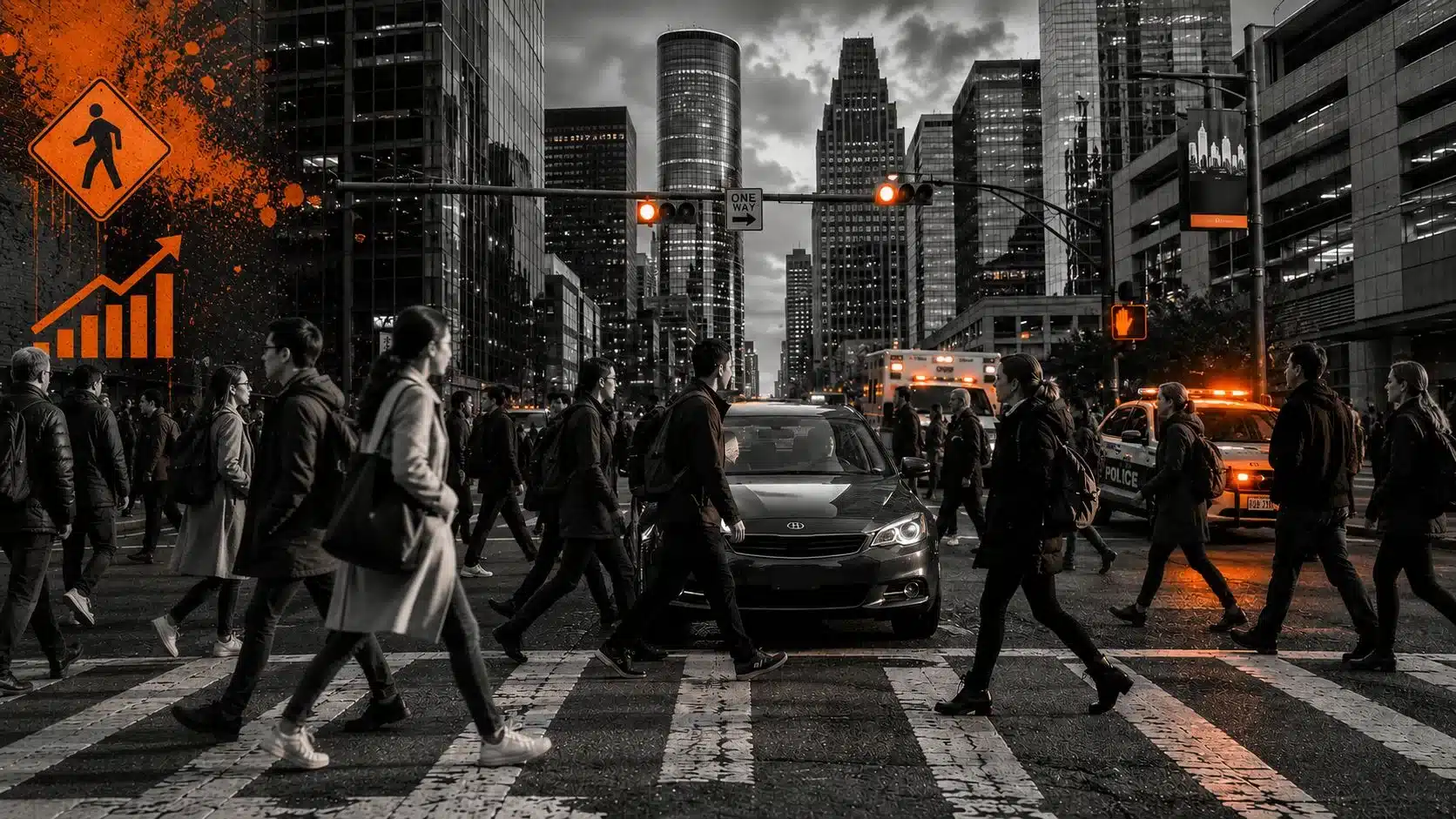
Pedestrian accidents remain a serious problem in major cities, but the latest numbers require some context. Preliminary data projects that pedestrian deaths fell 7 percent nationwide in 2025, marking the third consecutive annual decline. However, the projected 6,732 deaths were still 5 percent higher than in 2019, and pedestrian fatalities remain dramatically higher than they were approximately 15 years ago. Most pedestrian crashes also happen in urban areas, where heavy traffic, wide roads, nighttime visibility, distracted driving, and limited pedestrian infrastructure frequently combine to create dangerous conditions.
That means the most accurate answer is not simply yes or no. Pedestrian deaths have recently started moving in the right direction nationally, but the long-term trend remains alarming, and safety improvements have not been distributed evenly across every city.
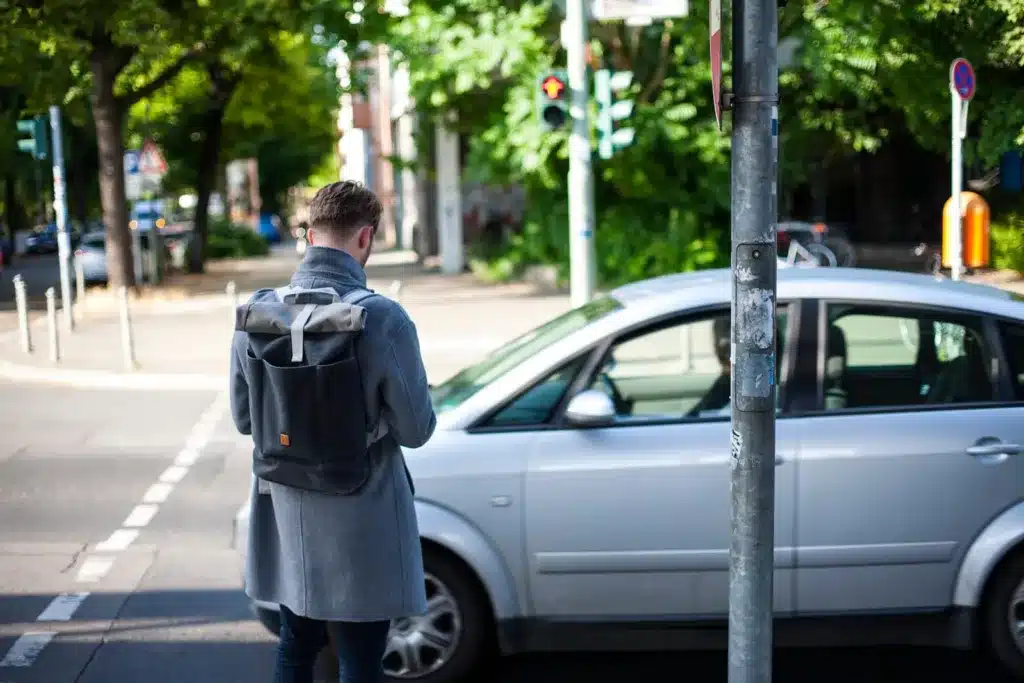
A pedestrian may be struck while crossing a downtown intersection, walking through a parking lot, exiting a bus, jogging beside a roadway, or navigating a street without a usable sidewalk. Because pedestrians have no seat belts, airbags, or vehicle frames protecting them, even a relatively low-speed collision can produce catastrophic injuries.
RTRLAW has represented personal injury and automobile accident victims since 1988. Our attorneys understand how pedestrian accident claims are investigated, how insurers try to shift blame onto injured pedestrians, and how state-specific laws can affect a victim’s right to compensation.
What Do the Latest Pedestrian Accident Statistics Show?
The most recent statistics show a modest short-term improvement against the backdrop of a much larger long-term safety crisis. National pedestrian fatalities reached a 40-year high in 2022 before declining in each of the following three years, based on preliminary 2025 figures.
| Time Period | What the Data Shows | What It Means |
| 2009 to 2024 | Pedestrian fatalities increased approximately 72 percent | The long-term trend remains sharply elevated |
| 2022 | Pedestrian deaths reached a 40-year high | The country experienced a modern peak in pedestrian fatalities |
| 2024 | 7,080 pedestrians were killed and more than 71,000 were injured | Fatalities declined but remained near historic highs |
| Preliminary 2025 estimate | 6,732 pedestrians were killed, down 7 percent from 2024 | This was the third consecutive annual decline, but deaths remained 5 percent above 2019 |
The National Highway Traffic Safety Administration reports that one pedestrian was killed approximately every 74 minutes in 2024. Although the projected reduction in 2025 is encouraging, thousands of families are still losing loved ones in preventable collisions every year.
The statistics therefore support two conclusions at once. Pedestrian fatalities are no longer rising every single year, but the United States remains far more dangerous for people walking than it was before the long-term increase began.
Edgar Garcia
The firm worked on the case diligently
Are Pedestrian Accidents Increasing in Every Major City?
Pedestrian safety trends vary widely from city to city. National statistics can decline even while individual cities or states experience increases. A city can make progress one year only to lose ground the next.
New York City, for example, reported that pedestrian fatalities declined from 122 in 2024 to 111 in 2025. The city attributed the broader traffic-safety improvement to continued Vision Zero projects, speed management, enforcement, street redesigns, and other interventions.
Boston presents a different recent example. In 2025, the Boston City Council reported that Massachusetts had experienced a 16 percent increase in pedestrian fatalities during 2024 and that Boston accounted for more pedestrian deaths caused by motor vehicles than any other municipality in the state.
Los Angeles recorded its first decline in total traffic deaths in several years during 2024, but still reported 304 traffic fatalities. The Los Angeles Department of Transportation also reports that speeding was directly involved in approximately one in five fatal crashes in the city during 2024.
These examples demonstrate why pedestrian safety cannot be judged by one national number. The risks depend on how a city designs its roads, manages speed, maintains sidewalks and crosswalks, enforces traffic laws, and responds to changing travel patterns.
Why Are Pedestrian Accidents Concentrated in Urban Areas?
Cities naturally contain more people walking near moving vehicles. Downtown districts, transit stops, entertainment areas, schools, apartment communities, parking garages, shopping centers, and mixed-use neighborhoods place pedestrians and drivers in close proximity throughout the day.
According to the Governors Highway Safety Association, approximately 84 percent of pedestrian crashes occurred in urban areas in 2024. Rural pedestrian crashes were more likely to be fatal, but cities accounted for the overwhelming majority of total collisions.
Common urban risk factors include:
- Large numbers of drivers, pedestrians, cyclists, buses, rideshare vehicles, and delivery vehicles sharing limited space
- Wide, multilane arterial roads that encourage higher vehicle speeds
- Long distances between protected crosswalks
- Drivers turning through crosswalks while watching other vehicles instead of pedestrians
- Heavy nighttime foot traffic near restaurants, bars, stadiums, hotels, and entertainment districts
- Vehicles entering and leaving parking garages, driveways, alleys, and shopping centers
- Tourists and unfamiliar drivers navigating complicated intersections
- Missing, obstructed, damaged, or poorly lit sidewalks and crosswalks
- Construction zones that force pedestrians into temporary or unsafe routes
- Rideshare and delivery drivers stopping suddenly or making unexpected maneuvers
Approximately 65 percent of pedestrian traffic fatalities occur on arterial roads. These are often high-volume, multilane streets originally designed to move vehicles efficiently rather than safely accommodate people walking between neighborhoods, businesses, schools, and transit stops.
Urban population density alone does not make severe pedestrian crashes inevitable. The design and operation of the roads through those populated areas often determine whether an ordinary human mistake becomes a close call or a fatal collision.
Why Speed Makes City Pedestrian Accidents So Dangerous
Vehicle speed affects both whether a crash happens and whether the pedestrian survives. A faster-moving driver has less time to recognize a pedestrian, react, brake, and avoid the collision.
Speed also increases the physical force transferred to the pedestrian at impact. Federal Highway Administration research has consistently found that pedestrian fatality risk rises as impact speed increases.
Speed-related pedestrian crashes commonly involve:
- Drivers accelerating to make a yellow light
- Vehicles traveling too fast for congested downtown conditions
- Speeding on wide urban arterials during off-peak hours
- Drivers failing to slow down near schools, parks, bus stops, and entertainment areas
- Motorists approaching crosswalks too quickly to stop safely
- Drivers traveling too fast for darkness, rain, fog, or other visibility conditions
A posted speed limit does not always establish a safe speed under the circumstances. A driver may still be negligent while traveling at or below the posted limit if traffic, visibility, weather, pedestrian activity, or road conditions required additional caution.
This is why evidence of speed can become central to a pedestrian accident case, even when the driver insists the pedestrian appeared suddenly.
Why Nighttime Pedestrian Accidents Are Increasingly Concerning
Pedestrian crashes become particularly dangerous after sunset. Darkness reduces the distance from which a driver can identify a person, understand their direction of travel, and react before reaching the crosswalk or roadway.
Approximately 76.5 percent of pedestrian fatalities with known lighting conditions occurred after dark in 2024. Only about 19.9 percent happened during daylight, with the remaining fatalities occurring around dawn or dusk.
Nighttime crashes frequently involve:
- Poorly illuminated crosswalks
- Streetlights blocked by trees or construction
- Dark clothing that reduces pedestrian visibility
- Headlight glare from approaching traffic
- Drivers traveling too fast for the distance illuminated by their headlights
- Alcohol- or drug-impaired drivers
- Late-night rideshare, delivery, restaurant, and entertainment traffic
- Pedestrians walking along roads without sidewalks
Lighting conditions can become important evidence after an accident. Photographs taken during daylight may not accurately show what the driver or pedestrian could see at the time of a nighttime collision, which is why an investigation may need to document the intersection at the same hour and under similar conditions.
Are SUVs and Pickup Trucks Making Pedestrian Accidents More Severe?
The growing number of larger vehicles on city roads is another important part of the pedestrian-safety discussion. SUVs, pickup trucks, and vans generally have taller and more vertical front ends than traditional passenger cars.
Light trucks, a category that includes SUVs, pickups, and vans, were the striking vehicle in approximately 50.4 percent of pedestrian fatalities in 2024. Passenger cars accounted for about 40.6 percent.
Larger vehicles can create several pedestrian risks:
- Taller front profiles may strike a pedestrian’s torso or head rather than their legs
- Larger blind spots can make children and shorter adults difficult to see
- Greater vehicle weight can increase the force involved in the collision
- Longer stopping distances may reduce a driver’s ability to avoid impact
- A pedestrian may be knocked down and pulled beneath the vehicle rather than pushed away
- Large vehicles may obstruct another driver’s view of a pedestrian in a crosswalk
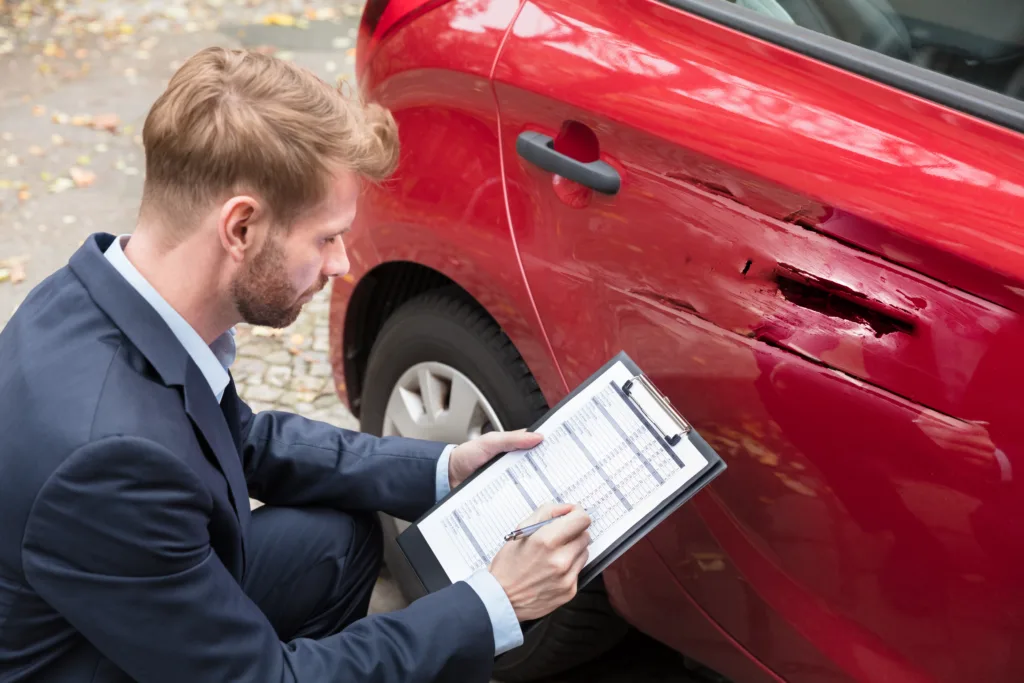
Vehicle type does not determine fault by itself. However, a vehicle’s blind spots, braking capacity, onboard cameras, warning systems, and physical design may all become relevant when reconstructing how the collision happened.
How Distracted Driving Contributes to Pedestrian Crashes
A pedestrian can disappear from a driver’s field of attention in the time it takes to read a text, change a navigation route, select a song, or look toward a passenger. Urban environments make that distraction especially dangerous because conditions change rapidly.
Distracted driving was identified in approximately 21.7 percent of pedestrian fatalities in 2024, up from 15.6 percent in 2019. Distraction may also be underreported because drivers do not always admit to using a phone, and investigators may not immediately obtain the relevant electronic records.
Potential forms of driver distraction include:
- Texting or reading notifications
- Using GPS or a rideshare application
- Taking photographs or recording video
- Eating or drinking
- Speaking with passengers
- Looking for an address or parking space
- Adjusting vehicle controls
- Monitoring delivery or dispatch instructions
Phone records, app activity, vehicle infotainment data, dashcam footage, and witness statements may help establish whether a driver was distracted. This information should be requested and preserved before it is deleted or overwritten.
Where Do Serious Pedestrian Accidents Commonly Happen in Cities?
Pedestrian accidents are not limited to marked crosswalks. They happen anywhere pedestrians and vehicles are expected to share or cross the same space.
Common locations include:
- Signal-controlled downtown intersections
- Marked and unmarked crosswalks
- Bus stops and transit stations
- Parking lots and parking garages
- Apartment and condominium entrances
- Shopping centers and grocery stores
- School zones and university campuses
- Hotel, resort, and entertainment districts
- Stadiums, arenas, and convention centers
- Construction zones and temporary walkways
- Driveways and alleys
- Roads without sidewalks
- Highway shoulders where motorists have exited disabled vehicles
Nearly 62.2 percent of pedestrian fatalities in 2024 occurred in locations without a sidewalk. A lack of safe pedestrian infrastructure can force people to walk beside moving traffic or cross at locations where drivers do not expect them.
The location of a pedestrian accident can also affect who may be responsible. A crash near a shopping center, construction project, poorly maintained intersection, or commercial driveway may involve negligent parties beyond the driver.
Pedestrian Right-of-Way Laws in Florida, Texas, Massachusetts, and Michigan
Pedestrian laws are not identical across the country. Because this article addresses a national issue rather than naming one state in the title, it is important to understand how several of the states served by RTRLAW approach crosswalk duties, shared fault, and filing deadlines.
| Rank | State | City | Employed 2024 | Severe injuries per 100k |
|---|---|---|---|---|
| 1 | California | Los Angeles-Long Beach-Anaheim | 6,694,398 | 0.03 |
| 2 | California | San Francisco-Oakland-Fremont | 2,486,083 | 0.04 |
| 3 | Washington | Seattle-Tacoma-Bellevue | 2,310,863 | 0.043 |
| 4 | Michigan | Detroit-Warren-Dearborn | 2,160,518 | 0.046 |
| 5 | Maryland | Baltimore-Columbia-Towson | 1,489,469 | 0.067 |
| 6 | Oregon | Portland-Vancouver-Hillsboro | 1,377,121 | 0.073 |
| 7 | Arizona | Phoenix-Mesa-Chandler | 2,703,656 | 0.074 |
| 8 | Indiana | Indianapolis-Carmel-Greenwood | 1,140,702 | 0.088 |
| 9 | North Carolina | Raleigh-Cary | 847,399 | 0.118 |
| 10 | North Carolina | Charlotte-Concord-Gastonia | 1,481,565 | 0.135 |
These are general rules, and exceptions can apply. Claims involving government agencies, minors, hit-and-run drivers, unidentified vehicles, wrongful death, or insurance benefits may involve different procedures and deadlines.
Florida Pedestrian Accident Laws
Florida Statute 316.130 requires drivers to stop or yield in several crosswalk situations. Drivers must also exercise due care to avoid colliding with pedestrians. Pedestrians, however, must obey applicable signals, may not suddenly step into the path of a vehicle that cannot reasonably stop, and generally must yield when crossing outside a marked crosswalk or an unmarked crosswalk at an intersection.
Florida uses modified comparative negligence. Under Florida Statute 768.81, an injured person who is more than 50 percent responsible for their own harm generally cannot recover damages. A person who is 50 percent or less at fault may recover, but the award is reduced by that percentage. Most negligence and wrongful death actions must generally be filed within 2 years.
Texas Pedestrian Accident Laws
Texas Transportation Code Chapter 552 requires drivers to stop and yield to pedestrians crossing within a crosswalk when the statutory conditions are satisfied. Pedestrians also have duties, including obeying traffic signals and avoiding sudden movement into the path of a vehicle that cannot safely stop.
Texas follows proportionate responsibility. A claimant whose responsibility is greater than 50 percent cannot recover damages, while a claimant who is 50 percent or less responsible may recover a reduced award. Texas generally gives an injured person 2 years to file a personal injury lawsuit.
Massachusetts Pedestrian Accident Laws
Massachusetts General Laws Chapter 89, Section 11 requires drivers to yield, slowing or stopping if necessary, when a pedestrian is crossing within a marked crosswalk and the statutory positioning requirements are met. Drivers may not pass another vehicle that has stopped at a marked crosswalk to allow a pedestrian to cross.
Massachusetts allows an injured pedestrian to recover when the pedestrian’s negligence was not greater than the combined negligence of the parties from whom recovery is sought. Compensation is reduced based on the pedestrian’s fault percentage. Personal injury actions generally must be filed within 3 years. Massachusetts motor vehicle policies also include a personal injury protection system that can affect how initial medical expenses and lost income are handled.
Michigan Pedestrian Accident Laws
Michigan law requires vehicles at signal-controlled intersections to yield to pedestrians lawfully within the intersection or an adjacent crosswalk, including when the vehicle is turning on green or after stopping for a permitted turn on red. Drivers approaching people using wheelchairs or walking-assistance devices must take necessary precautions to avoid an accident or injury.
Michigan reduces damages according to the pedestrian’s percentage of comparative fault. When an injured pedestrian is more than 50 percent at fault, noneconomic damages such as pain and suffering are generally unavailable, although economic damages may still be recoverable after reduction. The general limitations period for a personal injury or death claim is 3 years.
Because the rules and insurance systems differ, a pedestrian accident claim should be evaluated under state law where the collision occurred rather than under a generalized national standard.
Can a Pedestrian Recover Compensation If They Were Outside a Crosswalk?
Being outside a marked crosswalk does not automatically make a pedestrian entirely responsible for a collision. It can affect the fault analysis, but drivers still have a duty to remain attentive, travel at a reasonable speed, and take reasonable steps to avoid striking a person they see or should see.
Questions that may affect fault include:
- Was there a usable crosswalk nearby?
- Did the pedestrian cross between signal-controlled intersections?
- Was the road adequately illuminated?
- How fast was the vehicle traveling?
- How long was the pedestrian visible before impact?
- Was the driver distracted, impaired, or fatigued?
- Did parked vehicles or landscaping obstruct visibility?
- Did the pedestrian step suddenly into the vehicle’s immediate path?
- Was the pedestrian already most of the way across the road?
- Could the driver have braked, slowed, or changed lanes?
RTRLAW has handled pedestrian claims where the injured person initially appeared likely to receive most of the blame. Additional investigation revealed evidence that the driver was not paying attention or failed to react to a visible hazard. The police report’s initial impression is not always the final word on liability.
A pedestrian outside a crosswalk may therefore still have a viable claim, particularly when speeding, distraction, poor road design, impairment, or another driver violation contributed to the collision.
Who Can Be Held Liable for a City Pedestrian Accident?
The driver is often the primary responsible party, but urban pedestrian accidents can involve multiple businesses, property owners, employers, contractors, or government entities.
Potentially liable parties may include:
- A driver who was speeding, distracted, impaired, or failed to yield
- A rideshare driver working through an application at the time of the crash
- A delivery driver and the company responsible for the delivery operation
- A trucking company whose commercial driver struck the pedestrian
- An employer whose employee caused the crash while performing job duties
- A vehicle owner who negligently entrusted the vehicle to an unsafe driver
- A vehicle manufacturer responsible for defective brakes, cameras, sensors, or steering components
- A property owner whose landscaping, signs, or structures obstructed visibility
- A road-construction contractor that created an unsafe temporary pedestrian route
- A city, county, or state agency responsible for a dangerous intersection, malfunctioning signal, or missing traffic control device
Claims against a government entity can involve special notice requirements, sovereign-immunity laws, shortened procedural deadlines, and limits on recoverable damages. Those requirements may apply well before the ordinary personal injury statute of limitations expires.
Identifying every potentially responsible party is important because a catastrophic pedestrian injury can quickly exceed the limits of one driver’s insurance policy.
What Evidence Helps Prove Fault in a Pedestrian Accident?
Pedestrian accidents often happen in heavily traveled areas where valuable evidence exists but may disappear quickly. A strong investigation combines electronic, physical, medical, and eyewitness evidence.
Important evidence may include:
- The police crash report and any traffic citations
- Traffic camera footage
- Surveillance video from businesses, homes, parking garages, buses, and apartment buildings
- Dashcam footage from the involved vehicle or nearby motorists
- Eyewitness statements
- Photographs of the intersection, crosswalk, sidewalk, lighting, signs, and sight obstructions
- Vehicle damage and the location of impact
- Skid marks, debris, blood, clothing, or personal property left at the scene
- Event Data Recorder information showing speed, braking, steering, and acceleration
- Cellphone and application records
- Rideshare, delivery, or commercial dispatch records
- Medical records documenting the nature and timing of the injuries
- Accident reconstruction and visibility analysis
Video is often overwritten within days or weeks. Vehicles may be repaired, electronic data may be erased, and witnesses may become difficult to locate. Written preservation demands can help prevent businesses, insurers, and other parties from destroying relevant evidence after receiving notice of a potential claim.
The earlier the investigation begins, the greater the chance of establishing exactly where the pedestrian was, what the driver could see, and whether the collision could have been avoided.
How Insurance Companies Try to Blame Injured Pedestrians
Insurance companies understand that allegations of shared fault can reduce or eliminate what they must pay. They may therefore focus heavily on the pedestrian’s behavior, even when the driver was speeding, distracted, or violating the right-of-way rules.
Common insurance arguments include:
- The pedestrian was jaywalking
- The pedestrian crossed against a signal
- The pedestrian wore dark clothing
- The pedestrian was using a phone or headphones
- The pedestrian had consumed alcohol
- The pedestrian entered traffic too suddenly for the driver to stop
- The driver’s view was obstructed
- The pedestrian was not actually within the crosswalk
- The injuries were caused by a prior medical condition
- A delay in medical treatment proves the injuries were not serious
Dark clothing, headphones, or crossing outside a marked crosswalk do not automatically excuse negligent driving. The full analysis must also consider speed, reaction time, lighting, sight distance, driver attention, vehicle technology, and how long the pedestrian was visible.
Because casual statements can be taken out of context, an injured pedestrian should be cautious about providing a recorded statement to the driver’s insurance carrier before understanding how the statement may affect the claim.
What Should You Do After Being Hit by a Vehicle?
The first priority after a pedestrian accident is obtaining emergency medical help. Even when the injured person remains conscious or believes they can walk, internal bleeding, head trauma, spinal injuries, and fractures may not be immediately apparent.
After a pedestrian collision:
- Call 911 and request police and emergency medical assistance
- Do not attempt to leave the scene without being medically evaluated
- Photograph the vehicle, roadway, crosswalk, traffic signals, lighting, and surrounding businesses when possible
- Obtain the driver’s name, insurance information, license plate, and contact information
- Collect names and contact information from witnesses
- Ask the officer how to obtain the crash report
- Preserve damaged clothing, shoes, bags, phones, and other personal property
- Follow all medical instructions and attend recommended appointments
- Avoid posting details, photographs, or physical activities on social media
- Do not sign a release or accept a quick settlement before the injuries are fully evaluated
- Contact RTRLAW promptly so nearby video and electronic evidence can be preserved
A pedestrian accident can leave the victim unable to personally document the scene. A family member, friend, investigator, or attorney may need to act on the injured person’s behalf before evidence disappears.
Taking these steps can protect both the victim’s health and the evidence needed to establish responsibility.
What Compensation Is Available After a Pedestrian Accident?
Pedestrian injuries often require emergency transportation, surgery, hospitalization, rehabilitation, assistive devices, and extended time away from work. Compensation should account for the full effect of the accident rather than only the first hospital bill.
Recoverable damages may include:
- Emergency transportation and hospital expenses
- Surgery, rehabilitation, physical therapy, and medication
- Future medical treatment and long-term care
- Lost wages and employment benefits
- Reduced future earning capacity
- Pain and suffering
- Emotional distress and psychological treatment
- Disability, scarring, and disfigurement
- Loss of mobility and independence
- Loss of enjoyment of life
- Replacement of damaged personal property
- Wrongful death damages for qualifying surviving family members
The available compensation depends on the severity of the injuries, the applicable state law, available insurance coverage, the victim’s percentage of fault, and the identity of every responsible party.
No two pedestrian cases have the same value. An early settlement offer may not account for future surgery, permanent disability, lost earning capacity, or complications that become apparent after the initial treatment period.
What Happens When a Pedestrian Accident Is Fatal?
A fatal pedestrian accident may give surviving family members or the decedent’s estate the right to bring a wrongful death or survival claim. The exact parties entitled to recover and damages available depend on state law.
A wrongful death claim may seek compensation for:
- Funeral and burial expenses
- Medical expenses incurred before death
- Lost financial support
- Loss of household services
- Loss of companionship, guidance, and protection
- The surviving family’s mental pain and suffering when allowed by state law
- The decedent’s conscious pain and suffering through a survival action when available
Fatal claims also require immediate preservation of video, vehicle data, toxicology evidence, cellphone records, employment records, and insurance information. Families should not assume that a criminal traffic investigation will automatically gather everything needed for a civil case.
A wrongful death case cannot undo the loss, but it can hold the responsible parties accountable and provide financial protection for the people who depended on the person who was killed.
Are Vision Zero and Street-Safety Programs Working?
Many major cities have adopted Vision Zero, Complete Streets, lower speed limits, automated enforcement, protected pedestrian phases, raised crosswalks, improved lighting, and other programs designed to eliminate traffic deaths.
Some cities have achieved meaningful reductions. New York City reports that overall traffic deaths have fallen approximately 31 percent since launching Vision Zero in 2014, while Boston reports improvements in certain pedestrian and cyclist injury-crash measurements since its first action plan.
Common pedestrian-safety improvements include:
- Reducing speed limits in areas with heavy foot traffic
- Installing raised or highly visible crosswalks
- Creating pedestrian-only signal phases
- Using leading pedestrian intervals that allow people to enter the crosswalk before vehicles turn
- Improving nighttime lighting
- Building median refuge islands on wide roads
- Narrowing vehicle lanes to reduce speed
- Adding sidewalks and protected walking routes
- Removing parking spaces or landscaping that obstruct sightlines
- Using automated speed and red-light enforcement where permitted
These programs appear capable of reducing risk when cities make sustained investments in safer road design, speed management, enforcement, and data collection. However, the continuing national death toll shows that isolated projects are not enough to make every neighborhood safe.
Frequently Asked Questions About Pedestrian Accidents in Major Cities
Are pedestrian deaths currently increasing nationwide?
Not in the most recent year. Preliminary estimates indicate pedestrian deaths fell 7 percent in 2025, which would represent the third consecutive annual decrease. However, the projected total remained 5 percent higher than in 2019, and long-term pedestrian fatalities remain far above 2009 levels.
Why do most pedestrian crashes happen in urban areas?
Cities place more pedestrians near moving vehicles and contain complicated intersections, transit stops, parking facilities, delivery traffic, rideshare vehicles, and commercial driveways. Approximately 84 percent of pedestrian crashes occurred in urban areas in 2024.
Are pedestrians always entitled to the right of way?
No. Pedestrians generally have important protections in crosswalks and at traffic signals, but they must also obey pedestrian signals, avoid stepping suddenly into traffic, and follow state crossing laws. The exact rule varies by state and intersection type.
Can I recover compensation if I was partially responsible?
Possibly. Florida, Texas, Massachusetts, and Michigan all reduce compensation based on the injured person’s percentage of fault, but their recovery thresholds are not identical. Michigan also treats economic and noneconomic damages differently when the injured person is more than 50 percent at fault.
What if the driver left the scene?
Call 911 immediately and provide every available detail about the vehicle, driver, direction of travel, and license plate. Nearby traffic cameras, doorbell cameras, business surveillance systems, vehicle debris, and witness videos may help identify the driver. Uninsured motorist or other insurance coverage may also apply depending on the state and policies involved.
Can a city be responsible for a dangerous crosswalk?
Potentially. A government entity may share responsibility when a malfunctioning signal, missing sign, dangerous road design, obstructed sightline, inadequate maintenance, or known infrastructure hazard contributed to the accident. Government claims are subject to special rules, notice requirements, defenses, and damage limitations.
How long do I have to file a pedestrian accident lawsuit?
The general deadline is typically 2 years in Florida and Texas and 3 years in Massachusetts and Michigan. Exceptions and shorter procedural deadlines can apply, especially for government claims, insurance benefits, minors, and other special circumstances.
What if I was hit in a parking lot rather than on a public street?
You may still have a pedestrian injury claim. Drivers must remain attentive in parking lots, garages, driveways, and private commercial areas. A property owner or business may also share responsibility when unsafe traffic patterns, poor lighting, obstructed views, or inadequate maintenance contributed to the collision.
Protecting Your Rights After a Pedestrian Accident
Pedestrian fatalities have declined from their recent peak, but that progress should not disguise the scale of the problem. Thousands of people are still killed and tens of thousands are injured while walking every year, and most pedestrian crashes continue to happen in urban areas.
Determining responsibility requires more than asking whether the pedestrian was inside a painted crosswalk. A complete investigation must consider vehicle speed, driver attention, traffic signals, lighting, roadway design, surveillance footage, electronic records, insurance coverage, and the laws of the state where the collision happened.
RTRLAW has been fighting for injured accident victims since 1988. Our attorneys can investigate the crash, preserve critical evidence, identify every responsible party and source of insurance coverage, calculate the full value of your damages, and challenge attempts to unfairly blame you for your injuries.
If you or a loved one was injured in a pedestrian accident, call RTRLAW at 1-833-HIRE-RTR for a free, no-obligation case review. We handle pedestrian accident and personal injury cases on a No Win, No Fee basis; our team is available 24 hours a day, 7 days a week.