




What Is the Highest Risk of Accidents for Teen Drivers?
NHTSA reports that novice teen drivers have the highest crash rates of any age group during their first six months of unsupervised driving. The CDC data also show that drivers ages 16 to 19 have a fatal crash rate per mile driven nearly three times that of drivers 20 and older.
The issue is not that every teenager is reckless. New drivers are being asked to make dozens of decisions at once before many of those decisions have become automatic. A driver who has spent 20 years behind the wheel may recognize a car drifting into another lane before consciously thinking about it. A 16-year-old may still be learning where to look, how much following distance is enough, and when another driver’s movement should trigger a defensive response.
That difference in experience explains why the first months of independent driving deserve extra attention.
Why Are Newly Licensed Teen Drivers at Greater Risk?
Passing a driving test proves that a teenager can demonstrate basic driving skills under controlled conditions. It does not mean the driver has encountered every dangerous situation that can happen on the road.
NHTSA notes that novice teens rarely crash while an adult is supervising them, yet their crash rate rises sharply once they begin driving independently. The first six months of unsupervised driving are especially risky.
New drivers are still developing skills such as recognizing hazards early, judging closing speeds, choosing safe gaps in traffic, handling sudden braking, and adjusting to rain or darkness.
Those weaknesses may not be obvious during an ordinary drive to school. They become more important when something unexpected happens.
A vehicle ahead stops suddenly. A pedestrian steps into a crosswalk. Another driver runs a light. Traffic compresses on an interstate entrance ramp. An experienced driver may react almost instinctively. A newly licensed driver has much less experience to draw from.
That gap is one reason crash risk generally falls as teens spend more time behind the wheel.
djuana Franklin
Yes hello to whom it may concern I'm sending this message because RTR law firm has been a good law firm to me all of the staff that worked diligently for me and towards my case I want to say thank you from the bottom of my heart I will be referring you law firm and I pray much success to the staff and their family and wherever God send you all on a mission to do a job he's going to be there along with you I will be spreading thanks for the love
Night Driving Adds Another Layer of Risk
Driving after dark is harder for everyone. For a newly licensed teenager, it combines reduced visibility with limited experience.
The CDC says the nighttime fatal crash rate for drivers ages 16 to 19 is about three times the rate for drivers ages 30 to 59 per mile driven. It recommends keeping newly licensed teens off the road by roughly 9 or 10 p.m. for at least their first six months of independent driving.
At night, a driver has less time to see pedestrians, curves, debris, stopped cars, or animals entering the roadway. Headlight glare can make matters worse. Fatigue may also begin to affect reaction time.
Then there is the type of driving teens often do at night. Weekend trips, social events, teenage passengers, and unfamiliar destinations can put several risk factors into the same vehicle.
A late-night drive with three friends is not simply a nighttime-driving problem. It may also involve distraction, peer pressure, fatigue, and speeding.
Teenage Passengers Can Increase the Crash Risk
A passenger does not have to grab the steering wheel to become a serious distraction.
Conversation alone can pull a new driver’s attention away from changing traffic. Add loud music, multiple friends talking at once, someone showing the driver a phone, or pressure to drive faster, and the amount of information competing for the driver’s attention grows quickly.
The CDC reports that an unsupervised teen driver’s crash risk increases when teenage or young adult passengers are in the vehicle, and the risk rises as more young passengers are added.
That is why passenger restrictions appear in graduated licensing laws across the country.
Parents can be stricter than state law. The CDC recommends no teen or young adult passengers during the first six months of licensure when possible, or limiting the teen to one young passenger.
The restriction may feel inconvenient. It addresses one of the most consistent risk patterns involving inexperienced drivers.
Speeding Gives a New Driver Less Room to Make a Mistake
Teen drivers do not need to be traveling 100 mph for speed to become dangerous.
A teenager can be driving too fast for a wet road, a dark curve, heavy traffic, a construction zone, or the amount of space available ahead. The speedometer may show a number close to the posted limit while the actual conditions require something slower.
Higher speed shortens the time available to recognize a problem. It also increases stopping distance and the force of a collision.
For an inexperienced driver, that lost reaction time matters.
Parents teaching teenagers to drive should focus on more than the speed-limit sign. Teens need practice recognizing when traffic, weather, visibility, or road design requires them to slow down before a problem develops.
Phones Are Not the Only Distraction
Teen distracted-driving discussions often begin and end with texting. The problem is broader.
A driver can lose attention while:
- Changing music
- Looking at GPS directions
- Reading a notification
- Talking to passengers
- Eating or drinking
- Reaching into the back seat
- Adjusting vehicle controls
- Looking at something happening outside the car
A phone is particularly dangerous because it can combine visual, manual, and mental distraction.
For a new driver who is still learning where to focus attention, even a brief interruption can matter. Traffic does not stop moving because someone glanced down for a few seconds.
One practical rule is simple: set navigation and music before the vehicle starts moving, activate a driving-focus setting, and leave the phone alone until the car is parked.
Alcohol Is Especially Dangerous for Young Drivers
Alcohol and driving are dangerous at any age, but teenagers face an additional problem: their baseline crash risk is already high because of inexperience.
The CDC reports that drinking any amount of alcohol before driving increases crash risk for teens. Teen drivers also have a much higher crash risk than older drivers at the same blood alcohol concentration, including at BAC levels below the adult legal limit.
The safest rule for a teenager is therefore not a discussion about how much alcohol might be legal; there is no alcohol before driving.
The same principle applies to marijuana and other impairing substances. A new driver needs every bit of attention and reaction time available.
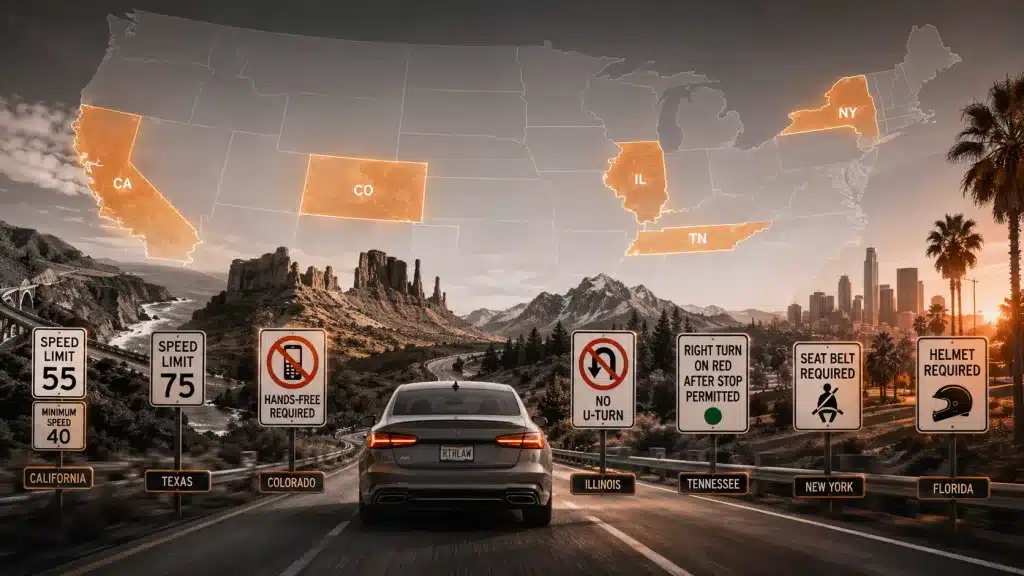
What Are The Teen Driving Laws in Some of the Different States Throughout the Country?
Most states use graduated driver licensing rules to reduce exposure to some of the situations that cause the most crashes.
Florida
Florida learner’s license holders must drive with a qualifying licensed driver who is at least 21. They are limited to daylight driving at first and may drive until 10 p.m. after holding the learner’s license for three months.
Once licensed, drivers under 17 generally may not drive between 11 p.m. and 6 a.m. unless accompanied by a qualifying adult or traveling directly to or from work. Seventeen-year-olds generally face a 1 a.m. to 5 a.m. restriction.
Texas
Texas drivers under 18 generally may not drive between midnight and 5 a.m. unless an exception applies. They also may not carry more than one passenger under 21 who is not a family member and may not use a wireless communication device while driving except in an emergency.
Massachusetts
Massachusetts Junior Operator License holders may not generally drive between 12:30 a.m. and 5 a.m. unless accompanied as required by law. The state also restricts young passengers during the early period of junior operation.
Michigan
Michigan’s Level 2 Intermediate License limits unsupervised driving between 10 p.m. and 5 a.m., restricts the number of passengers under 21, and prohibits cellphone use except in limited circumstances.
These laws establish minimum restrictions. Families can set tighter rules when a teenager is not ready for passengers, highways, nighttime trips, or other difficult driving situations.
What Can Parents Do During the First Year of Driving?
The license should not mark the end of driving instruction.
A teenager who has never driven through a heavy thunderstorm should not have to learn that skill alone. The same is true for interstate merging, nighttime driving, unfamiliar downtown traffic, or roads crowded with pedestrians.
Parents can keep building experience by riding along during situations the teen has not mastered yet.
A few rules also make sense during the highest-risk period:
- Limit young passengers
- Establish a reasonable nighttime curfew
- Require phones to stay out of use
- Practice highway and bad-weather driving together
- Treat speeding seriously
- Require seat belts for everyone in the vehicle
- Make it clear that the teen can call for a safe ride without trying to hide a mistake
The goal is not to prevent teenagers from becoming independent drivers. It is to let experience catch up with that independence.
What If a Teen Driver Causes an Accident?
Being a teenager does not automatically make someone legally responsible for a crash; fault still depends on what happened.
Evidence may show that the teen was speeding, texting, following too closely, or violating a traffic signal. It may also show that the other driver caused the collision.
Useful evidence can include the crash report, witnesses, surveillance video, dashcam footage, vehicle data, photographs, phone records, and statements from passengers.
The driver’s age may explain why certain licensing restrictions applied, but negligence must still be established from the facts.
Depending on the state and the circumstances, additional questions may involve the vehicle owner, applicable insurance policies, or whether someone allowed an unlicensed or improperly restricted driver to use the vehicle.
Frequently Asked Questions
When is a teen driver’s accident risk highest?
The first several months of unsupervised driving are the highest-risk period. NHTSA specifically identifies the first six months after independent driving begins as a period when novice teens have the highest crash rates of any age group.
Does having friends in the car really make a difference?
Yes, research summarized by the CDC shows that crash risk rises when an unsupervised teen carries teenage or young adult passengers, and it increases as more young passengers are added.
Is nighttime driving more dangerous for teenagers?
Yes, the CDC reports that the nighttime fatal crash rate for drivers ages 16 to 19 is about three times the rate for drivers ages 30 to 59 per mile driven.
Are 16-year-olds at greater risk than older teens?
Generally, yes. The CDC reports that the crash rate per mile for 16-year-old drivers is about 1.5 times the rate for drivers ages 18 to 19.
Helping Teen Drivers Get Through the Highest-Risk Period
The greatest risk for a teen driver is not one particular road or one specific type of vehicle; it is being inexperienced while facing situations that demand quick judgment.
That risk is highest soon after independent driving begins.
Families can lower it by controlling the factors they can control. Give a new driver time to build experience before adding late-night trips, several teenage passengers, or other unnecessary distractions.
When a serious crash does happen, the cause should be determined from the evidence rather than assumptions about the driver’s age.
RTRLAW has represented people injured in motor vehicle accidents since 1988. If you or your child was hurt in a crash caused by another driver, call 1-833-HIRE-RTR for a free, no-obligation case review. Qualifying personal injury cases are handled on a No Win, No Fee basis.